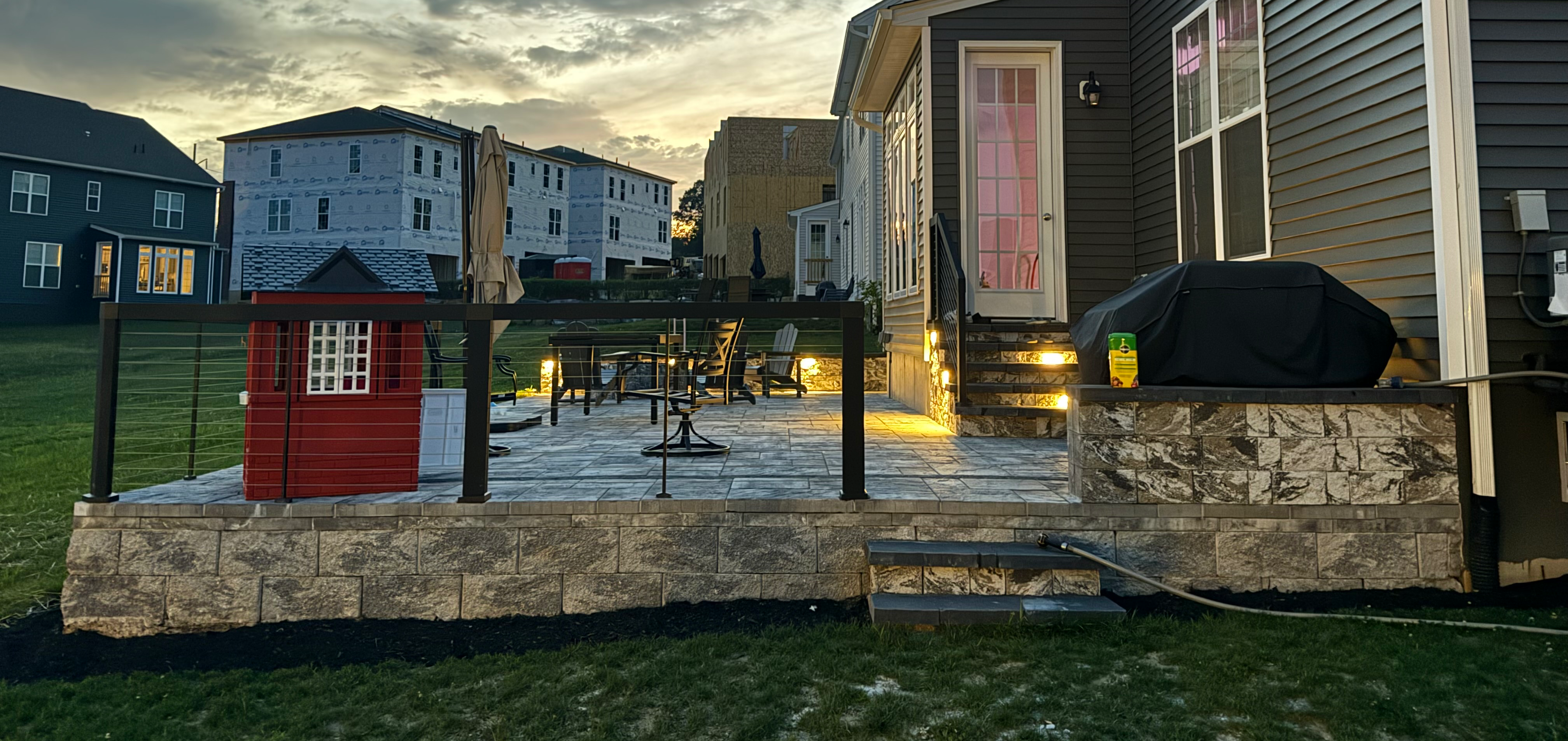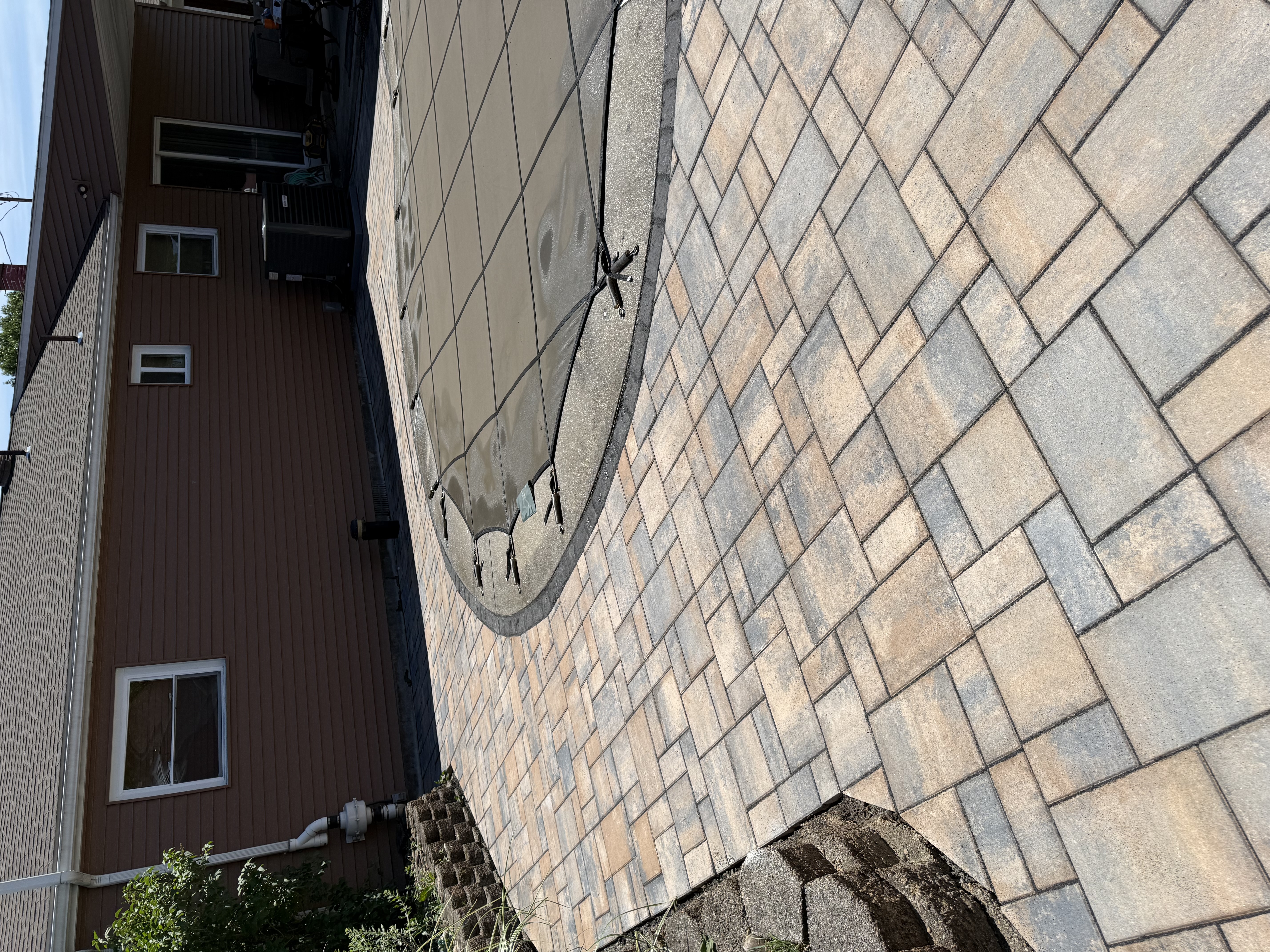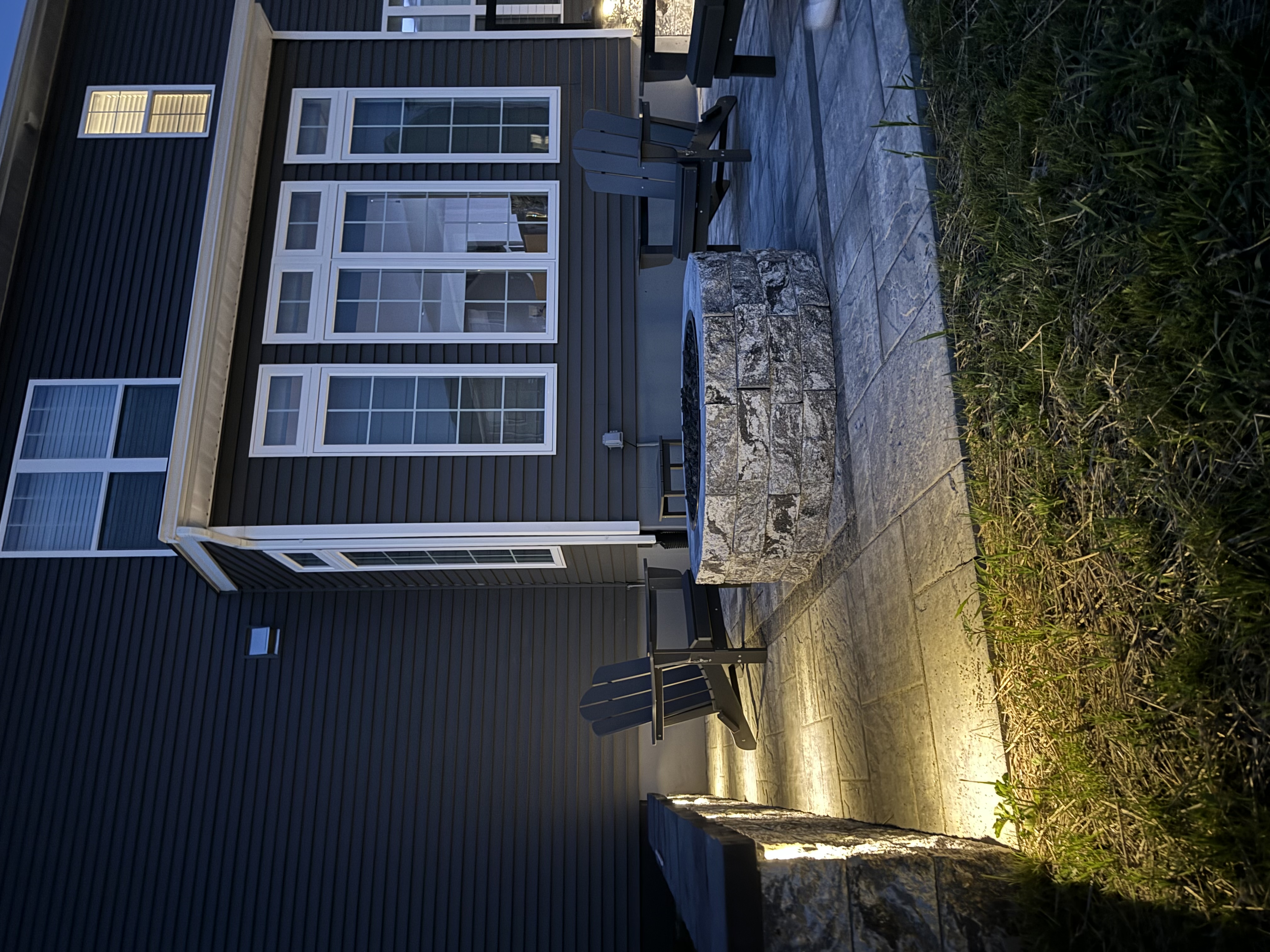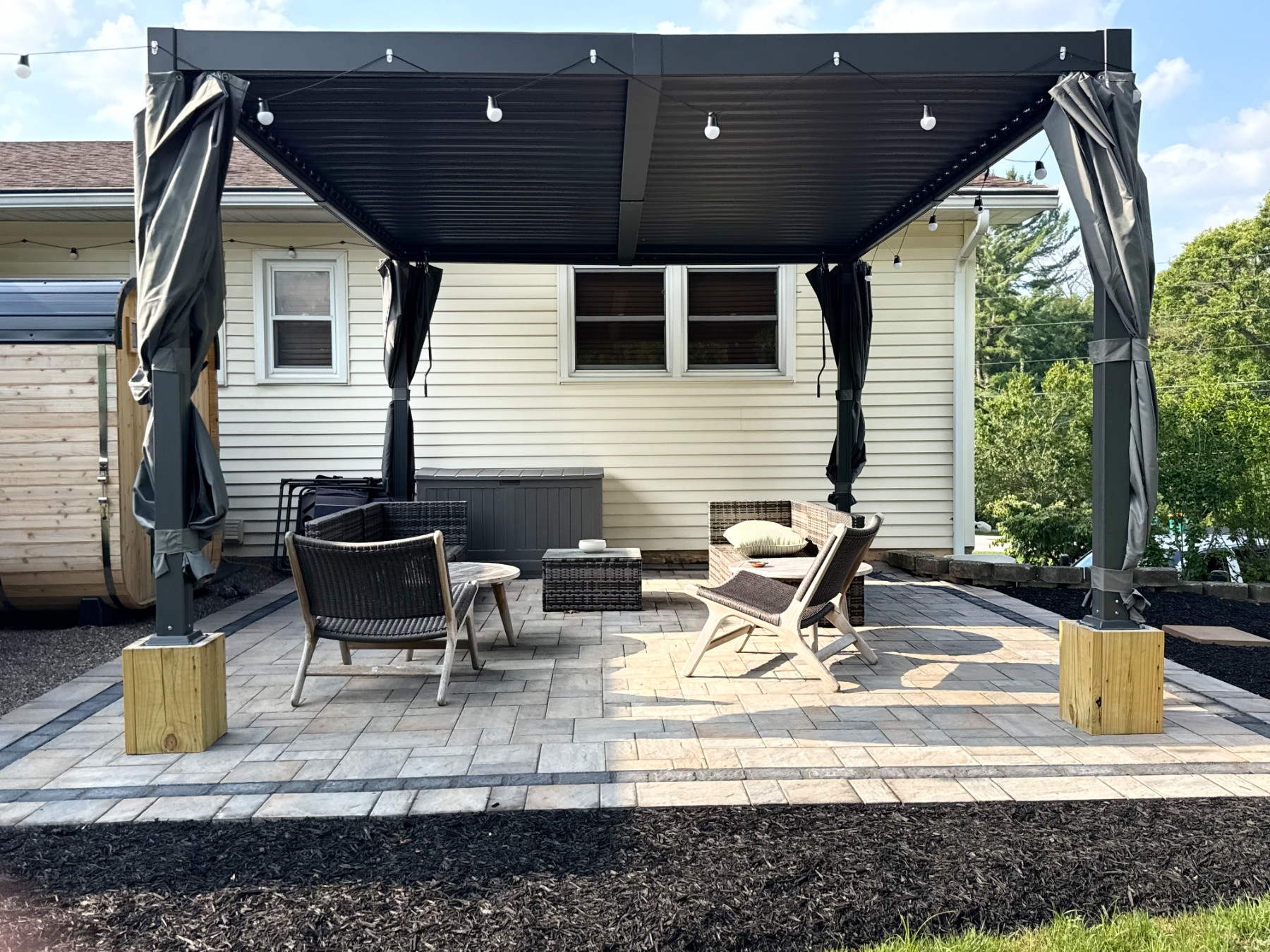
A patio is more than the pavers you see. The system underneath determines how the finished surface is supported, leveled and handles water. Alejandro's builds that foundation in layers—including a clean, angular stone-chip bedding course instead of a conventional sand setting bed.
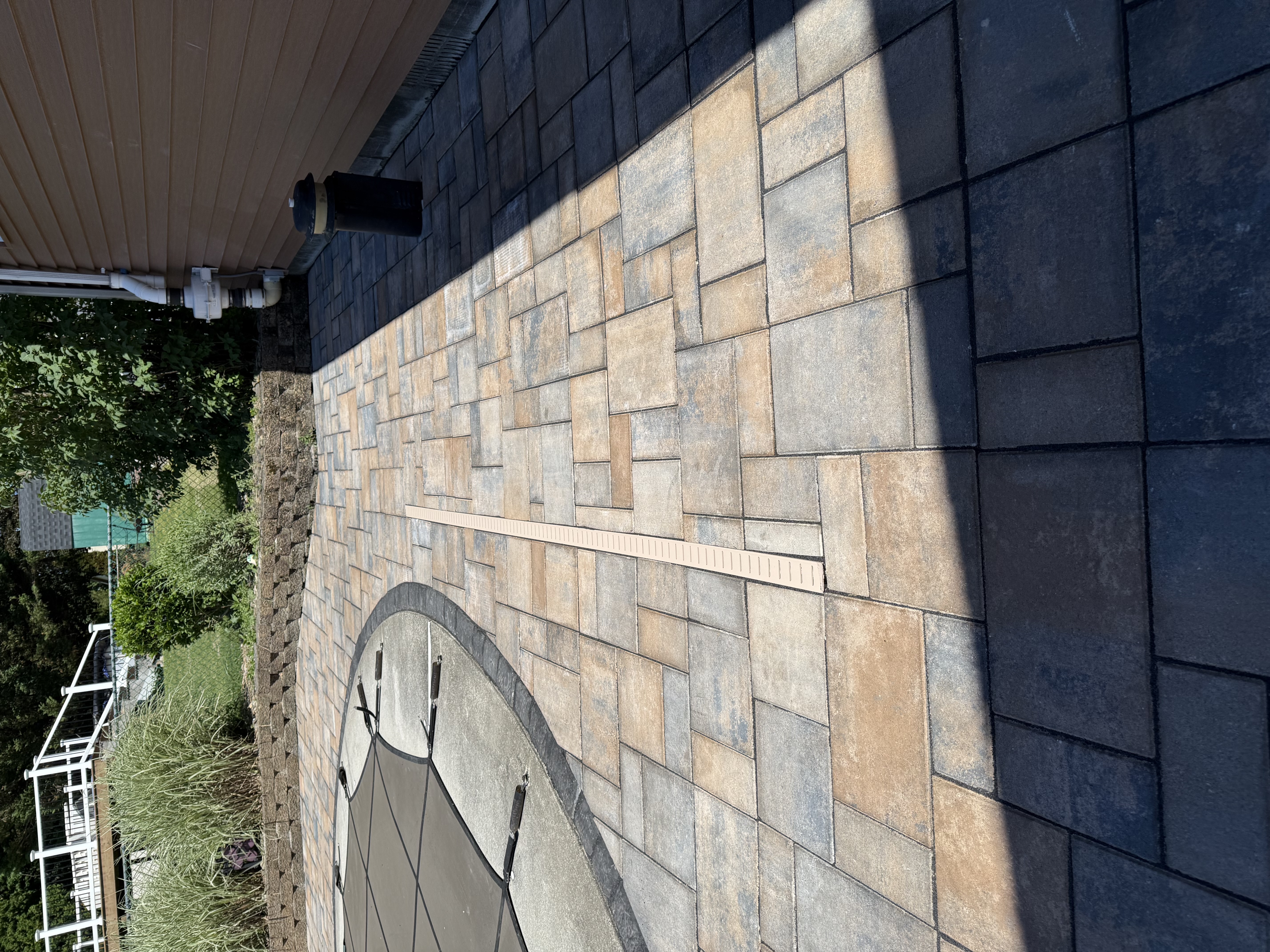
The finished field is secured at the perimeter and the joints are filled appropriately for the system.
Pavers are set to the planned elevations, pattern and pitch.
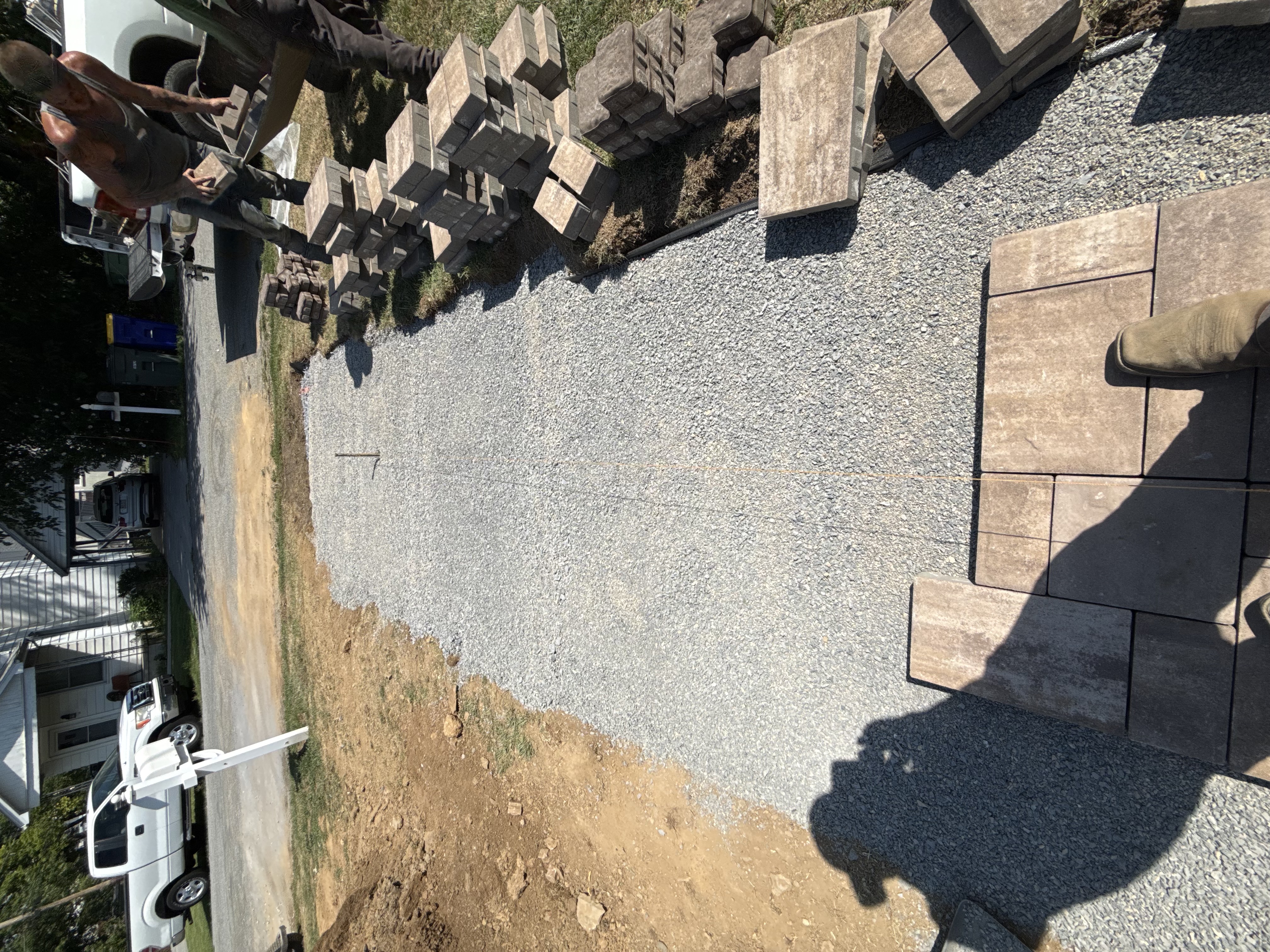
Instead of a conventional sand setting bed, we level the pavers over clean stone chips. The open-graded material allows water to move through the bedding layer rather than relying on a fine sand layer directly beneath the pavers.
The structural aggregate base provides the patio's foundation.
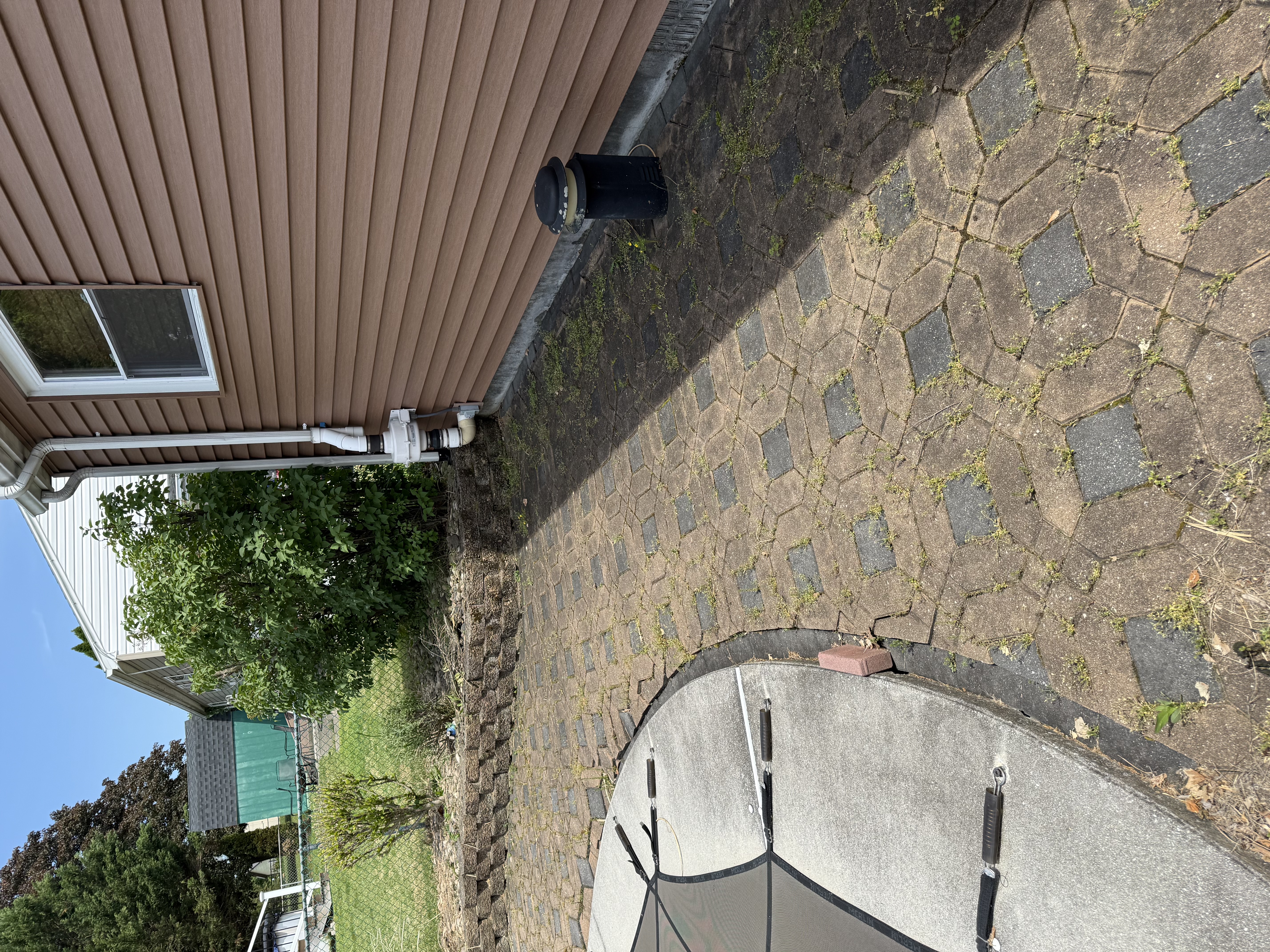
The existing surface is excavated and prepared for the patio system.
Water gets beneath outdoor paving. Our bedding system is designed around that reality, using clean stone beneath the pavers as part of a stable, free-draining assembly.
You don't need to know the dimensions, paver pattern or finished layout before you call. We look at how the patio connects to the house, how you'll use it, and what the property allows.
Dining, seating, grilling, fire features and how many people the patio needs to accommodate.
Doors, walkways, pools and the natural routes people take through the yard.
Slope, elevation, drainage and whether steps or retaining walls need to become part of the project.
Smooth, tumbled or textured faces, in blends chosen to sit with the siding, brick or stone already on the house.
Pattern changes how big the patio reads and how busy it looks. Modular breaks up a large field; running bond and herringbone add direction.
A contrasting border around the field is the simplest way to make a patio look finished. It also holds the cut edge on curves.
Straight lines suit a formal house and a square yard. Curves follow a pool, a planting bed or the way people walk through the space.
We install pavers from Techo-Bloc and Cambridge, giving homeowners a wide range of colors, textures, sizes and patterns to work with.
Product availability varies by project, color and style.


Most paver patio projects we build in Central Pennsylvania fall between $10,000 and $50,000. Size sets the base number. Excavation depth, equipment access to the back yard, drainage work, the paver chosen, and any steps, walls or fire features move it from there. Every estimate should state what preparation and materials are included.
Most paver patios take 3–7 days once construction begins. Laying the pavers is rarely what takes longest. Excavation, hauling spoil out through a narrow gate, drainage work, and rain that delays base compaction are what extend a schedule.
A cracked slab can't be patched invisibly. Pavers are individual units, so a damaged section can be lifted and reset instead.
Some. Joint sand can wash out over time and should be topped up, and weeds or moss in the joints are easier to handle early. A patio on a sound base shouldn't need resetting.
We excavate, build a compacted stone base, and level the pavers on a clean 1B stone-chip bedding course instead of sand. The base decides whether a patio stays flat through Pennsylvania freeze-thaw.
Yes. The patio is cut into the grade, raised on a retaining-wall base, or split into levels with steps. Which one depends on how far the ground falls and where the door sits.
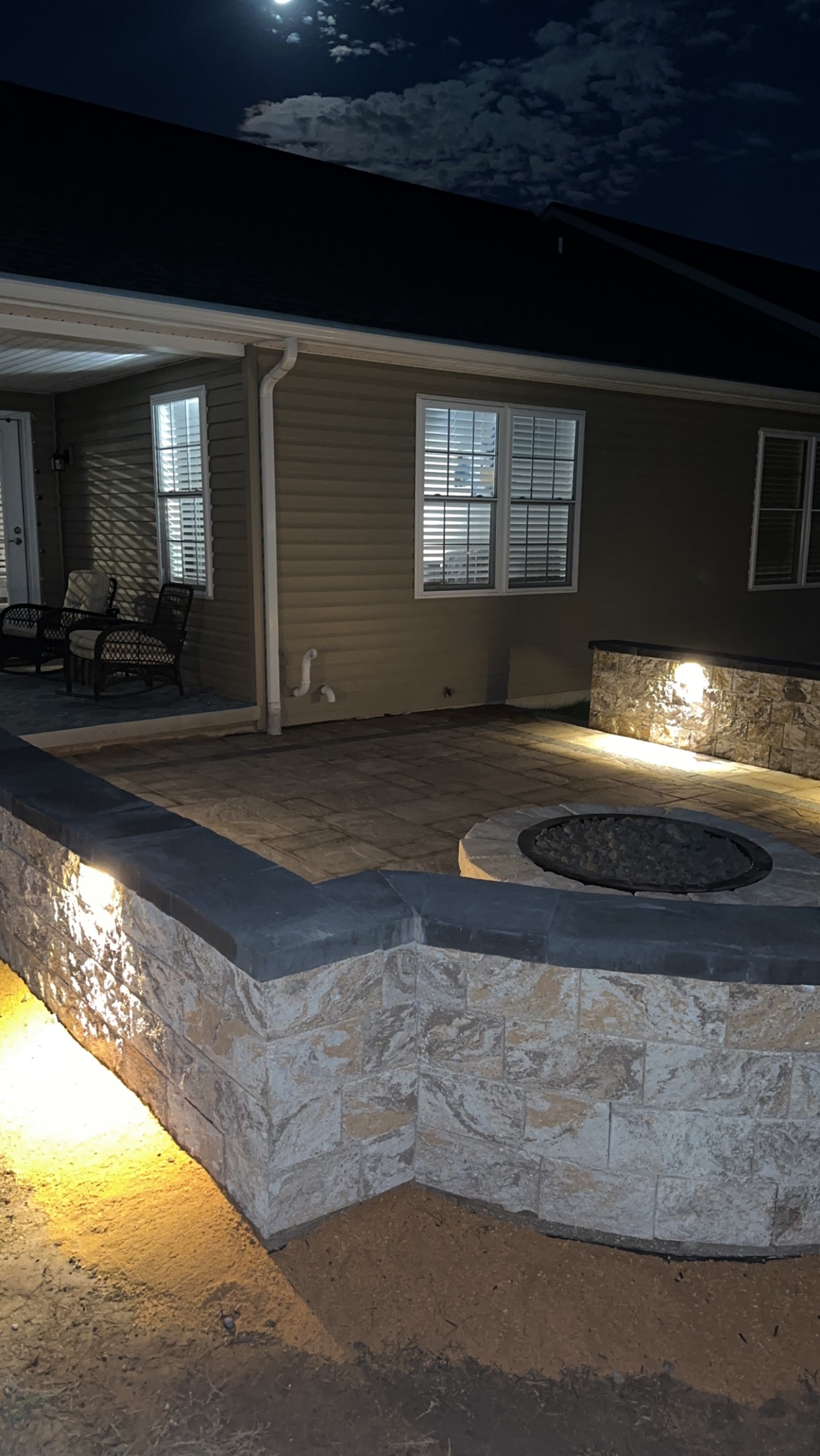
Retaining walls →Yes, and it's simpler at the same time. Wall footings, the patio base and lighting wires all go in during one excavation, instead of cutting into a finished patio later.
Fire features & seat walls →Towns within about twenty miles of New Cumberland, including Camp Hill, Mechanicsburg, Lemoyne, Harrisburg and Hershey, across Cumberland, Dauphin and York counties.
Service area →Camp Hill · Mechanicsburg · New Cumberland · Lemoyne · Harrisburg · Enola · Hershey · Hummelstown · Dillsburg · Elizabethtown
Full service area →Where we workMechanicsburg, PAAll service areas →
Tell us what you are working with and what you would like the space to become. We will take a look at the property and talk through the project with you.