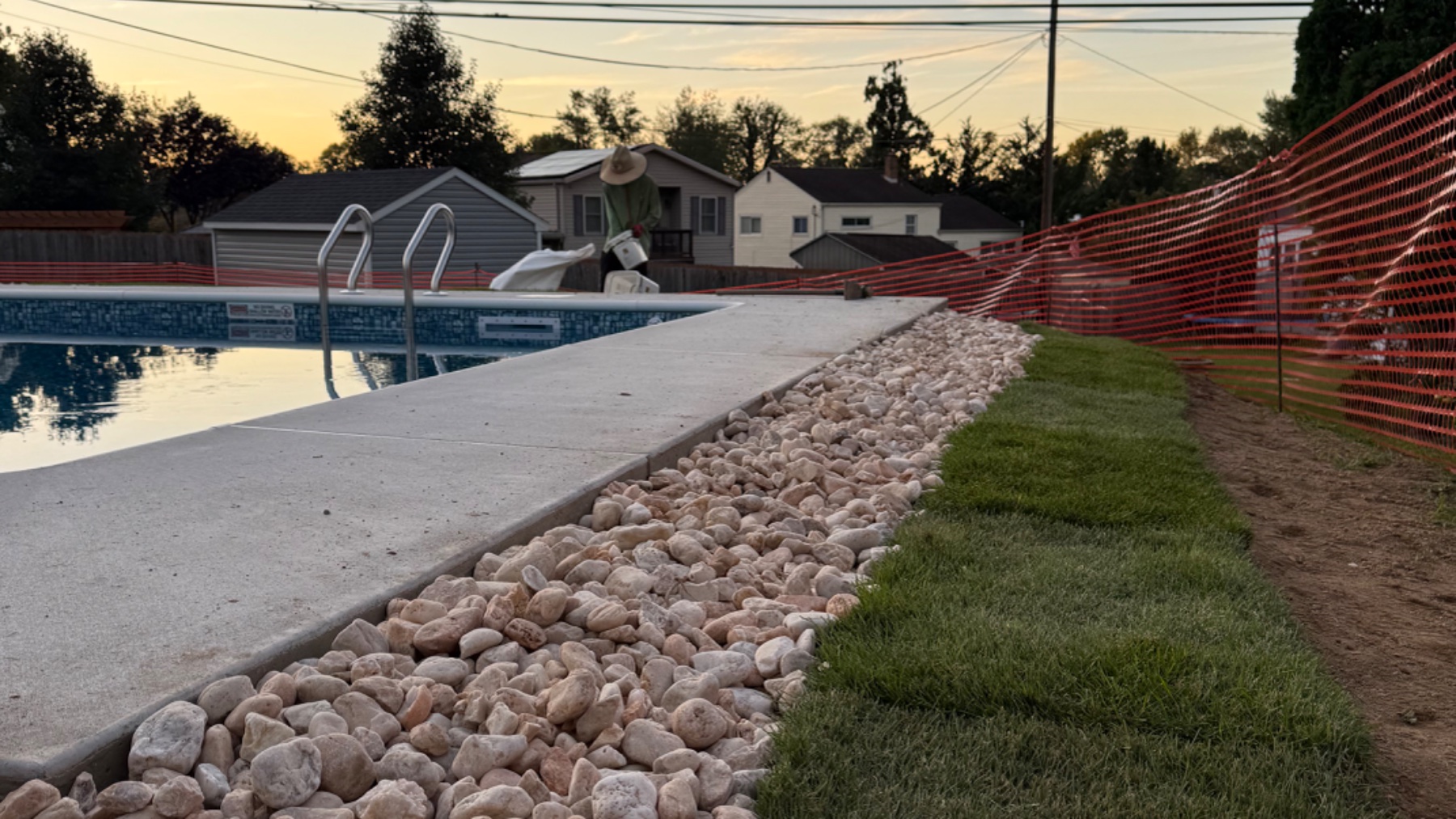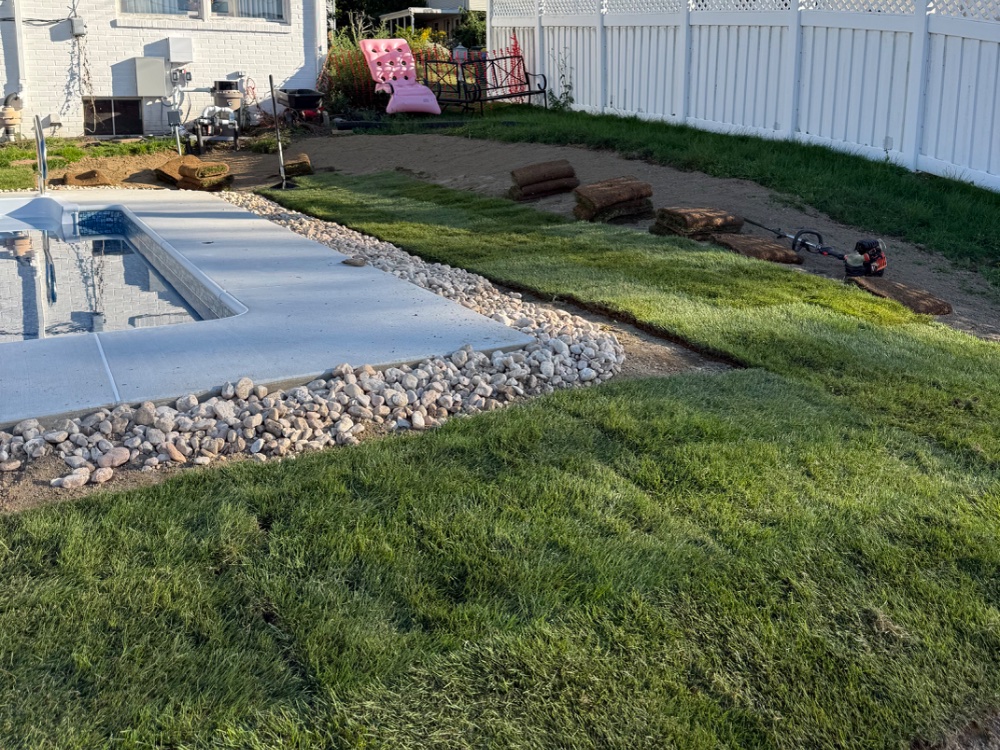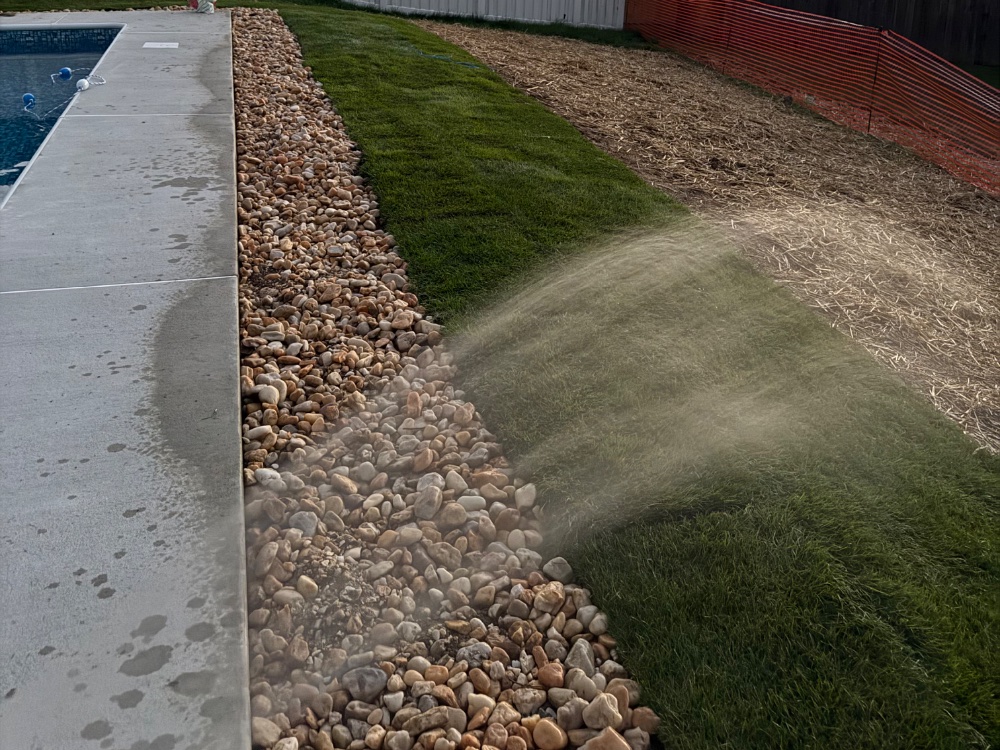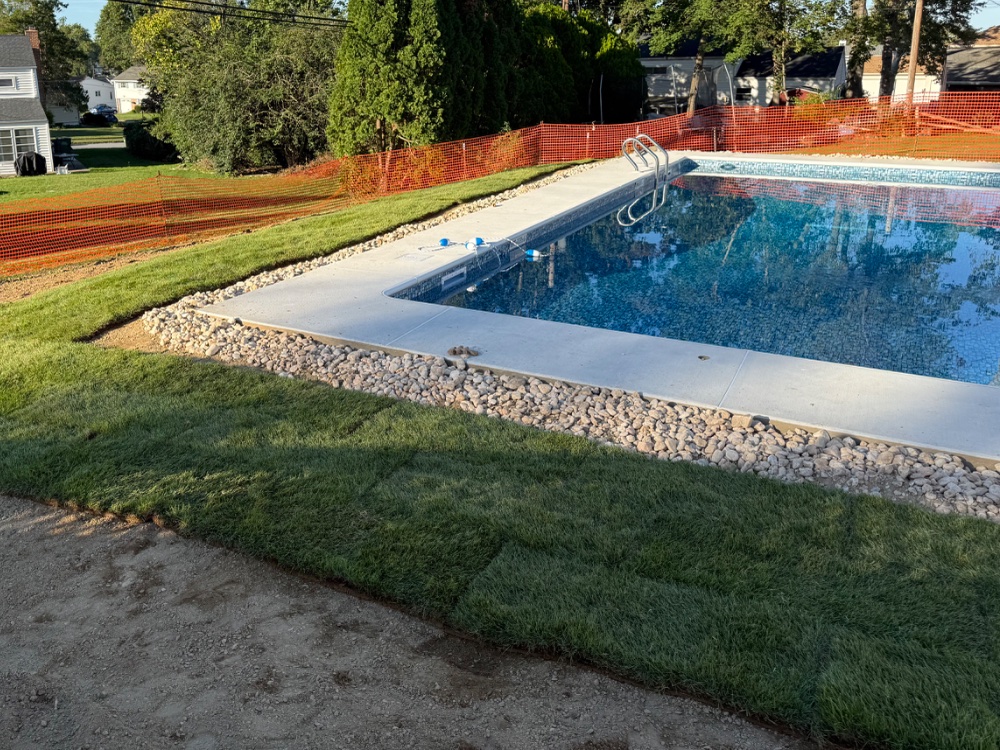
Send a photo and rough square footage. The first question is always whether the ground needs grading or topsoil before anything gets laid.
Sod knits into what is underneath it. Laid over compacted subsoil it roots shallow and browns in the first dry spell, so grade and soil get settled first.
[VERIFY WHETHER GRADING IS INCLUDED OR QUOTED SEPARATELY.] Water has to run away from the house before sod goes down over it.
[VERIFY WHETHER TOPSOIL IS SUPPLIED and at what depth.]
[VERIFY SOD TYPE AND SUPPLIER — bluegrass blend, fescue, or a mix, and where it is cut.]
Sod is a living product and starts declining the day it is cut. [VERIFY DELIVERY-TO-INSTALL WINDOW.]
[VERIFY SEAM STAGGERING AND WHETHER SOD IS PEGGED on slopes.]
[VERIFY WATERING GUIDANCE PROVIDED and whether follow-up visits are offered.]
[VERIFY SOD PRICING PER SQUARE FOOT INSTALLED.] Square footage sets the base number. Whether the old lawn has to come out first, whether grading or topsoil is needed, and how far the pallets have to be barrowed from the truck all move it. Prep is often the larger half of the price.
Sod gives a finished lawn the day it is laid, holds a slope immediately, and goes down across a wider season. Seed costs a fraction as much and roots more deeply over time, but it needs weeks of consistent watering and a good establishment window. Slope, erosion and how soon you need to use the yard usually decide it.
Most of the growing season, which is one of its advantages over seed. Spring and early fall are easiest because the sod needs less water to establish. Mid-summer installation works but the watering demand is heavy and unforgiving — sod that dries out on the pallet or in the first week does not recover.
Often. Sod laid over compacted subsoil left behind after construction roots shallow and browns in the first dry spell. Ground that falls toward the house sends water where you least want it. [VERIFY HOW ALEJANDRO'S ASSESSES THIS and whether grading is included or a separate line.]
Grading & drainage →Light foot traffic after about two to three weeks, once it has knitted into the soil underneath — test it by lifting a corner, and if it resists it has rooted. Keep pets and furniture off until then. First mow comes after it has rooted and reached about three inches.
A heavy soak the day it goes down, then daily water for the first two weeks so the soil under the sod stays damp, not just the blades. After it roots, less often and more deeply. Watering is what decides whether sod takes, and it is the homeowner's job — a hot dry week without it will lose the lawn.
We will tell you whether the ground needs work before anything gets laid.