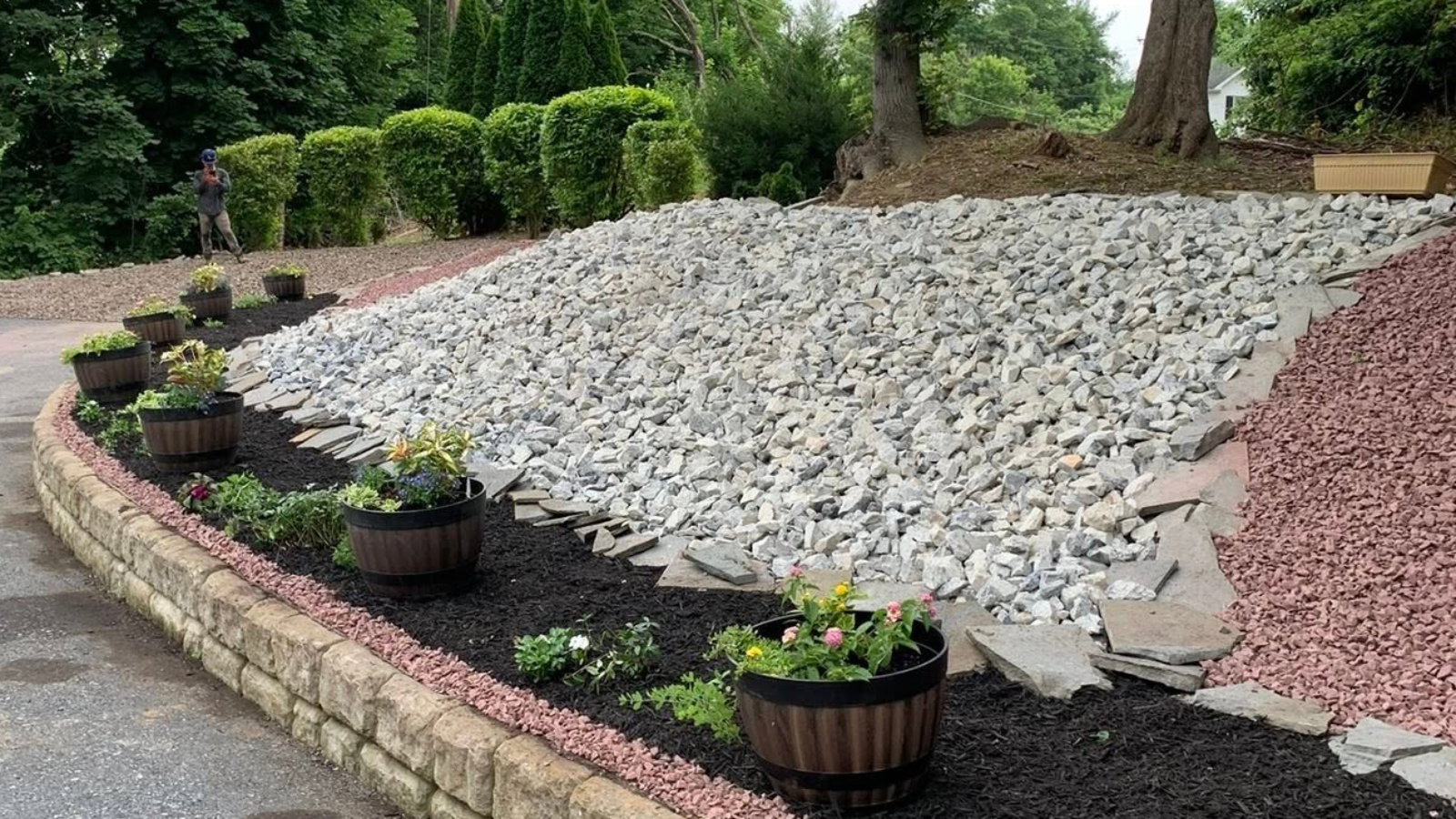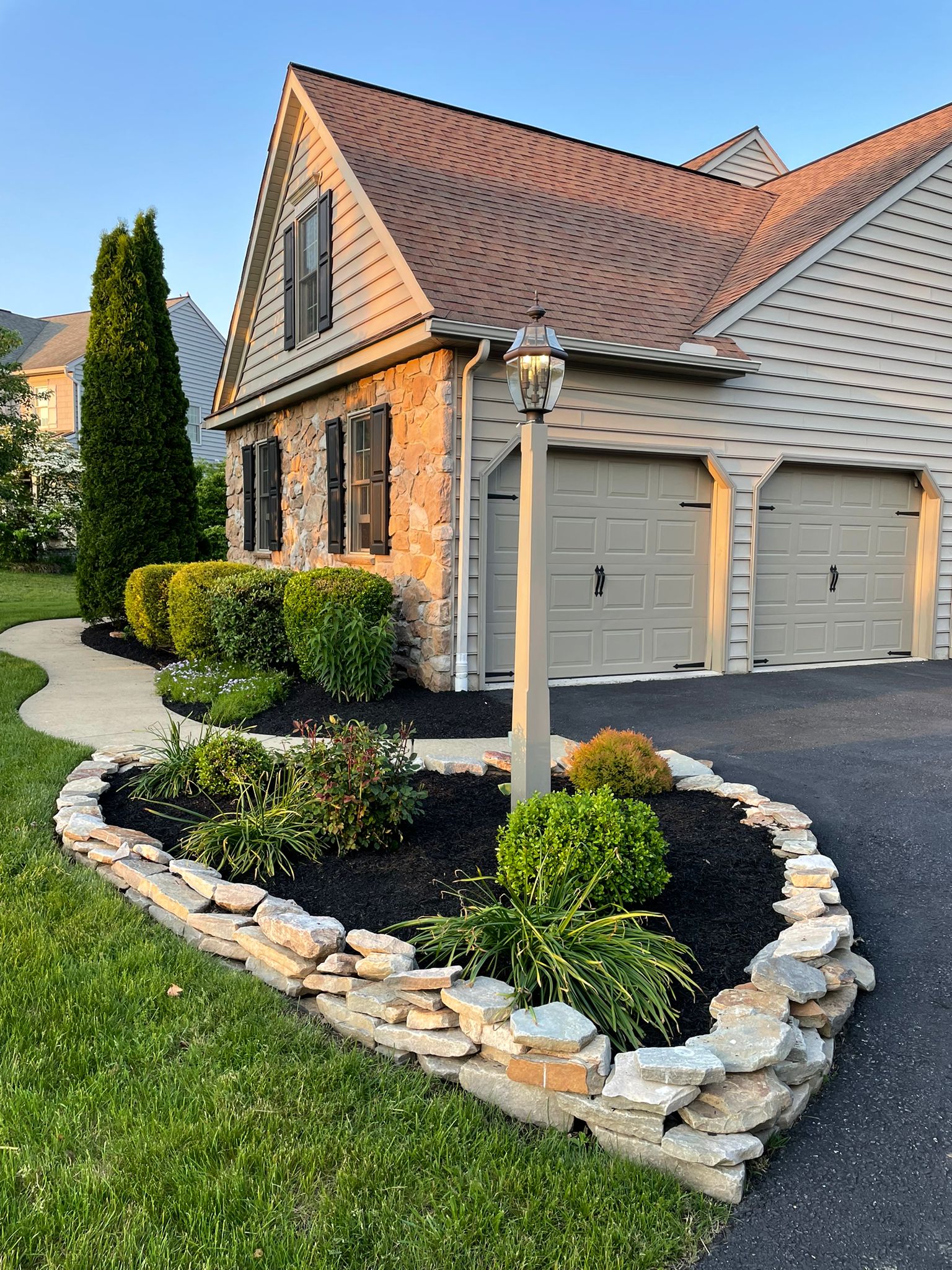
Shape before plants.
A bed cut in one long curve does more than any shrub you put in it.
Height, then depth.
Tall at the back, low at the front, nothing standing in a single row.
Green in February.
Evergreen structure keeps the bed reading after everything else dies back.
Homeowners tend to start by choosing plants. Every one of these does more for the finished result than the species does.
The single biggest change, and the cheapest. A bed cut in a long shallow curve reads as designed. One that traces the foundation in a straight strip reads as an afterthought.
Tall at the back, mid in the middle, low at the front, and nothing planted in a single row. Depth is what separates a landscape from a hedge.
Something with green in February. A bed built entirely from things that die back looks finished in June and empty for five months.
Mulch is warmer and softer and needs redoing. Stone is permanent, reflects heat, and is unforgiving if you change your mind.
Shrubs planted tight to the wall grow into the siding and block the windows within a decade. Space is planned for the mature size, not the pot size.
A mature specimen worth keeping changes the whole plan. Most renovations save more than the homeowner expects.
Send a photo of the front of the house. Most of what decides a planting plan is visible in one picture — which way it faces, what is already there, how much room there is to work with.
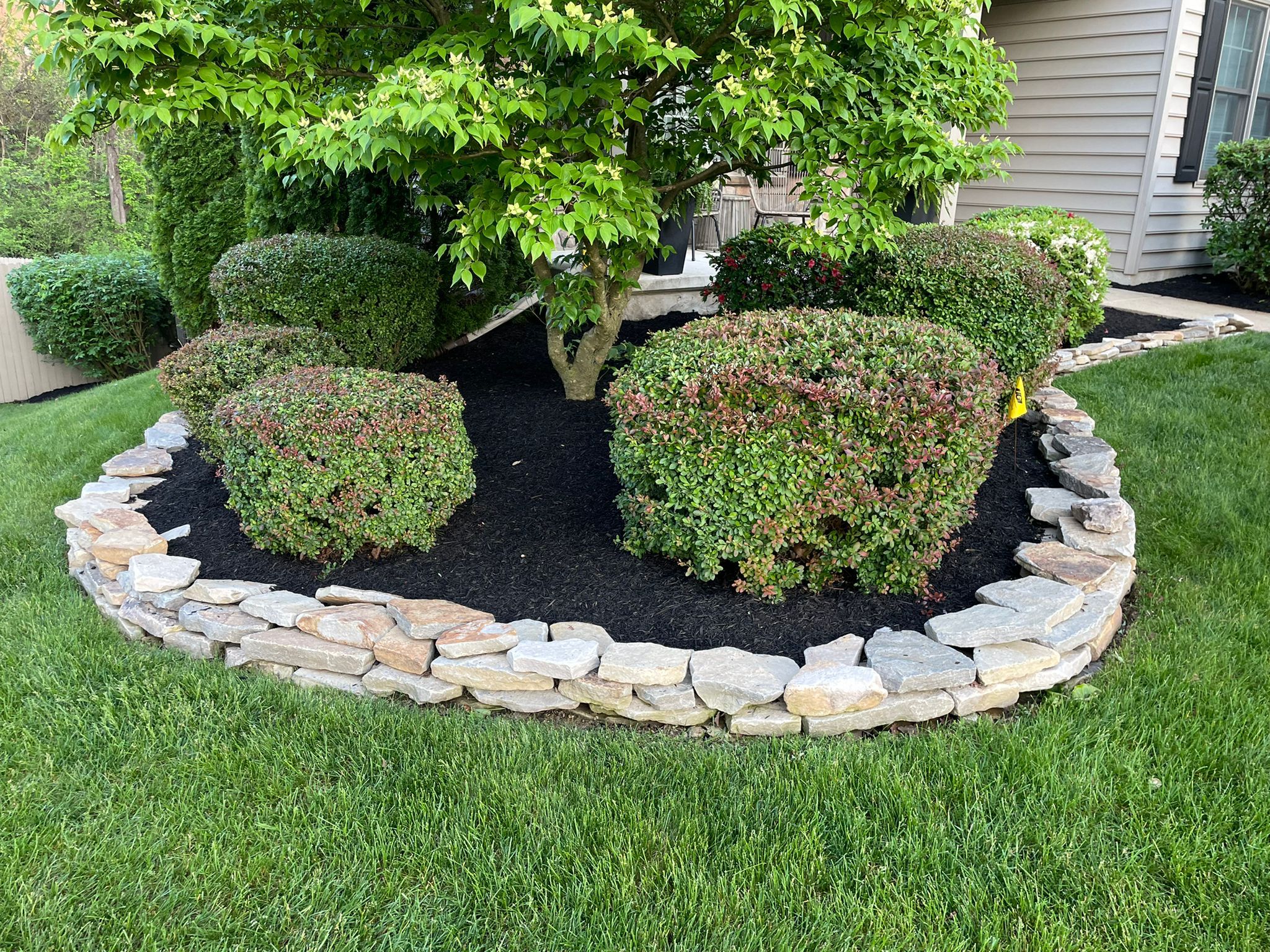
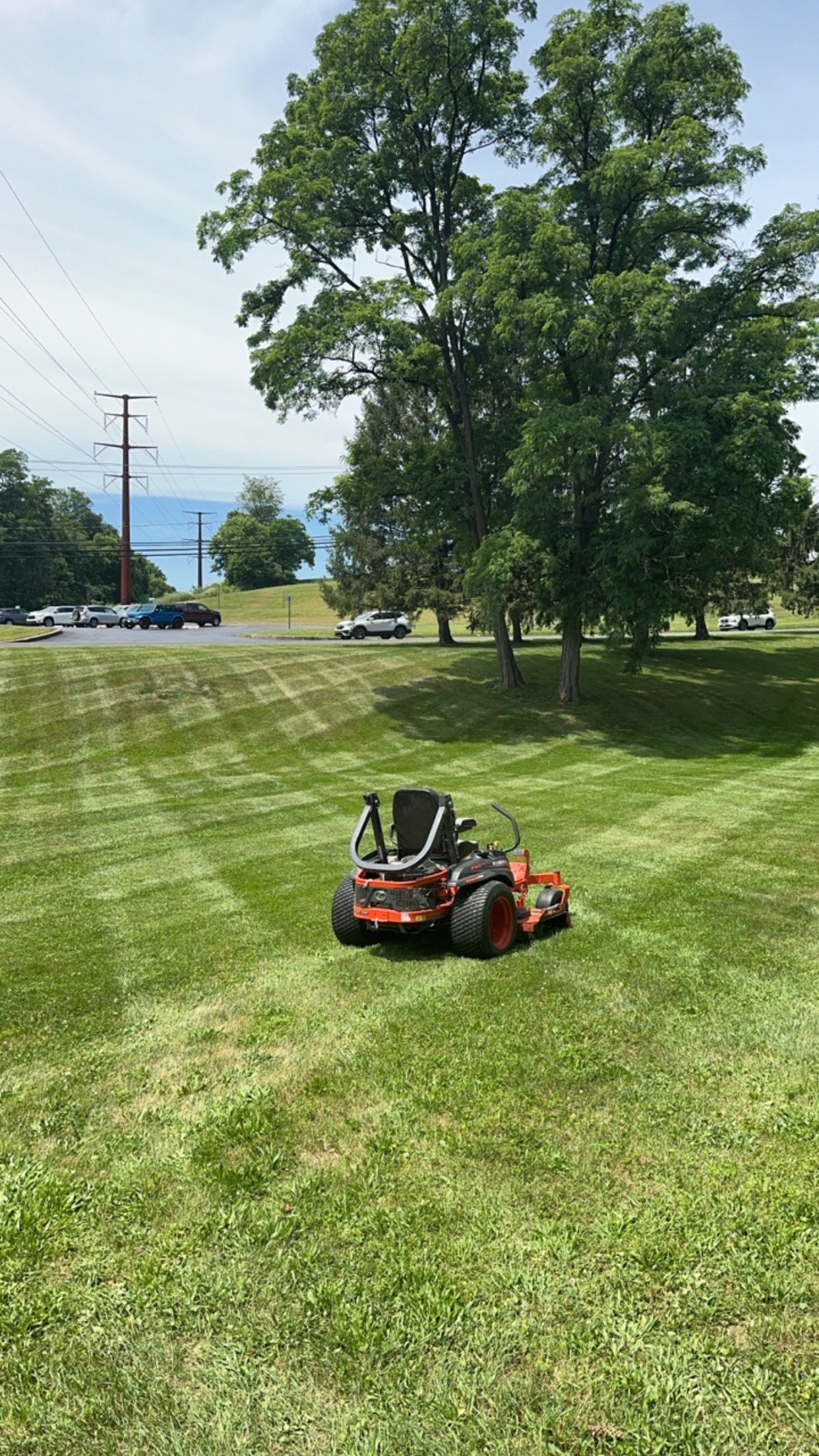
Cut, shaped, edged and prepared before anything goes in the ground.
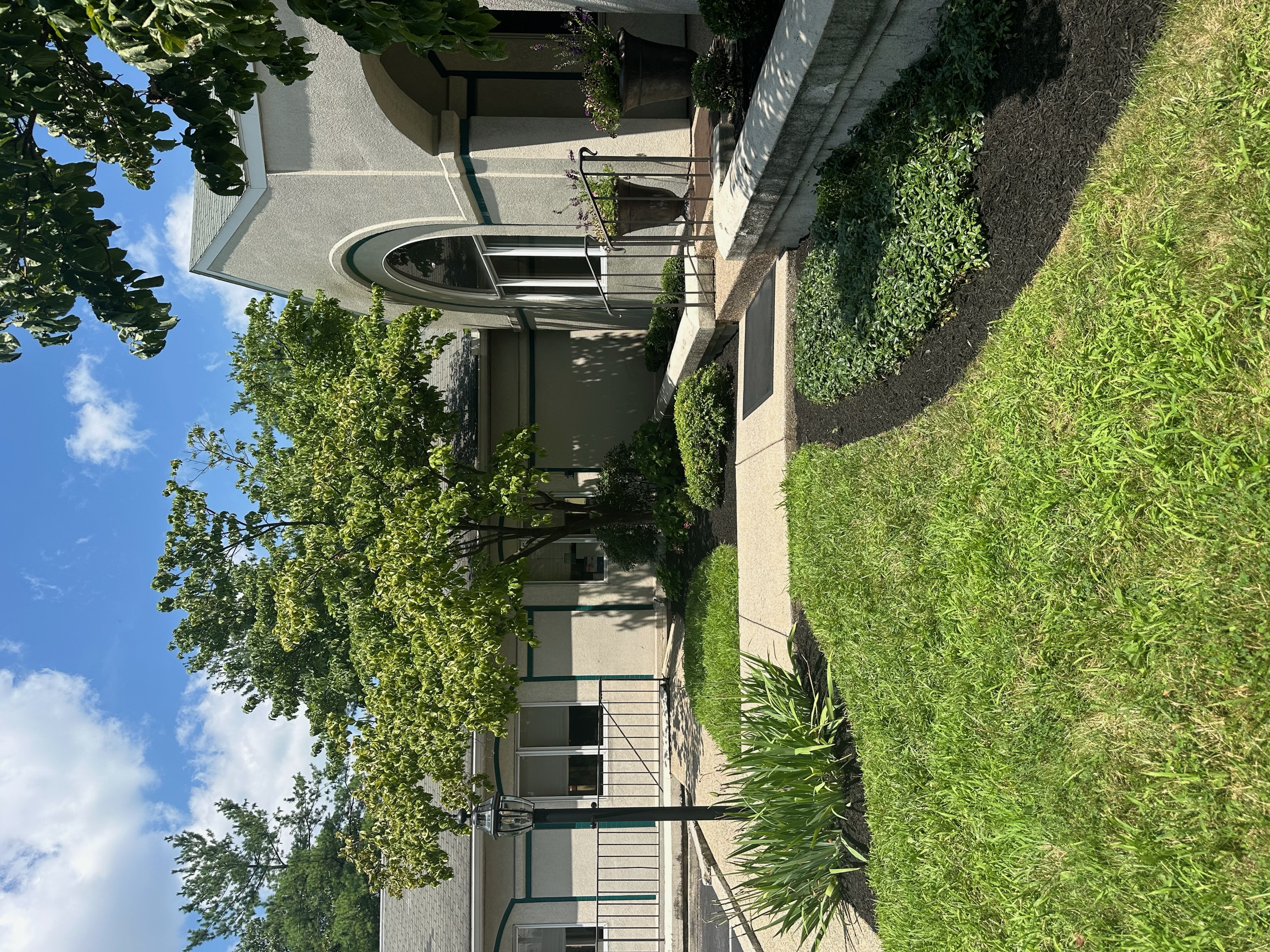
Layered shrubs and ornamental plantings selected and set in prepared beds.
Set into the ground rather than laid on top of it.
Taking out overgrown foundation shrubs often reveals grading nobody has looked at since the house was built.
A plant that is wrong for the spot does not fail immediately. It fails in year four, which is long after anyone connects it back to the decision.
Not at noon. At four in the afternoon in July, and whether the house shades it by six.
A bed that stays wet kills anything that wants drainage, and no amount of amendment fixes a low spot.
The most common mistake on any property. What fits under the window now is above the roofline in fifteen years.
From the street, from the driveway, from the kitchen window. Not every side of a house earns the same investment.
Some plantings hold their shape on one cut a year. Others need four. Worth deciding before, not after.
Roots, moisture against the wall, and whether anyone can still get to the hose bib or the meter.
We stand in the yard and look at exposure, drainage and what is already growing well. The things worth keeping usually get decided here, and they change the plan more than anything else does.
Bed shapes, plant list, sizes, edging, mulch or stone, and what is being removed first.
Removal, soil preparation, edging, planting, mulch. Beds get cut before anything is planted so the lines are set while there is still room to stand in them.
The first season is watering, and that part is yours. Everything installed is chosen to survive a normal Central PA winter, not a perfect one.
Bed size, how much has to come out first, plant sizes, soil condition and access all move the number. Larger plants cost more but look finished immediately; smaller stock costs less and catches up in two or three seasons.
Usually, and it is worth asking for. A mature specimen that has been in the ground twenty years cannot be bought back at any price. Most renovations keep more than the homeowner expected — the work is taking out what has outgrown the space and rebuilding the beds around what stays.
Spring and fall both work, and fall is often better — the soil is still warm, the air is cooler, and roots establish before winter without the plant fighting summer heat. Summer installation is possible but needs far more watering.
Worth asking any contractor — a quote for plants is not the same thing as a plan for a yard.
Yes, and it is the better sequence. Beds get cut after the hardscape is set, so the lines follow the finished patio rather than being worked around. The excavation is already open, the machine is already there, and the lawn only gets torn up once.
Hardscaping →One picture tells us most of what a planting plan needs — which way it faces, what is there now, how much room there is to work with.